What is Medisophy?
Medisophy is the philosophy of medicine practised at the bedside — not as an academic exercise, but as a living discipline that a physician engages every time they reason through a diagnosis, communicate a prognosis, or confront uncertainty. It is the examined life applied to clinical practice: asking why we think the way we think, and what medicine demands of the thinking physician.
A discipline coined to name what happens when a physician stops and asks — not just what is wrong with the patient, but what kind of thinking this moment requires.
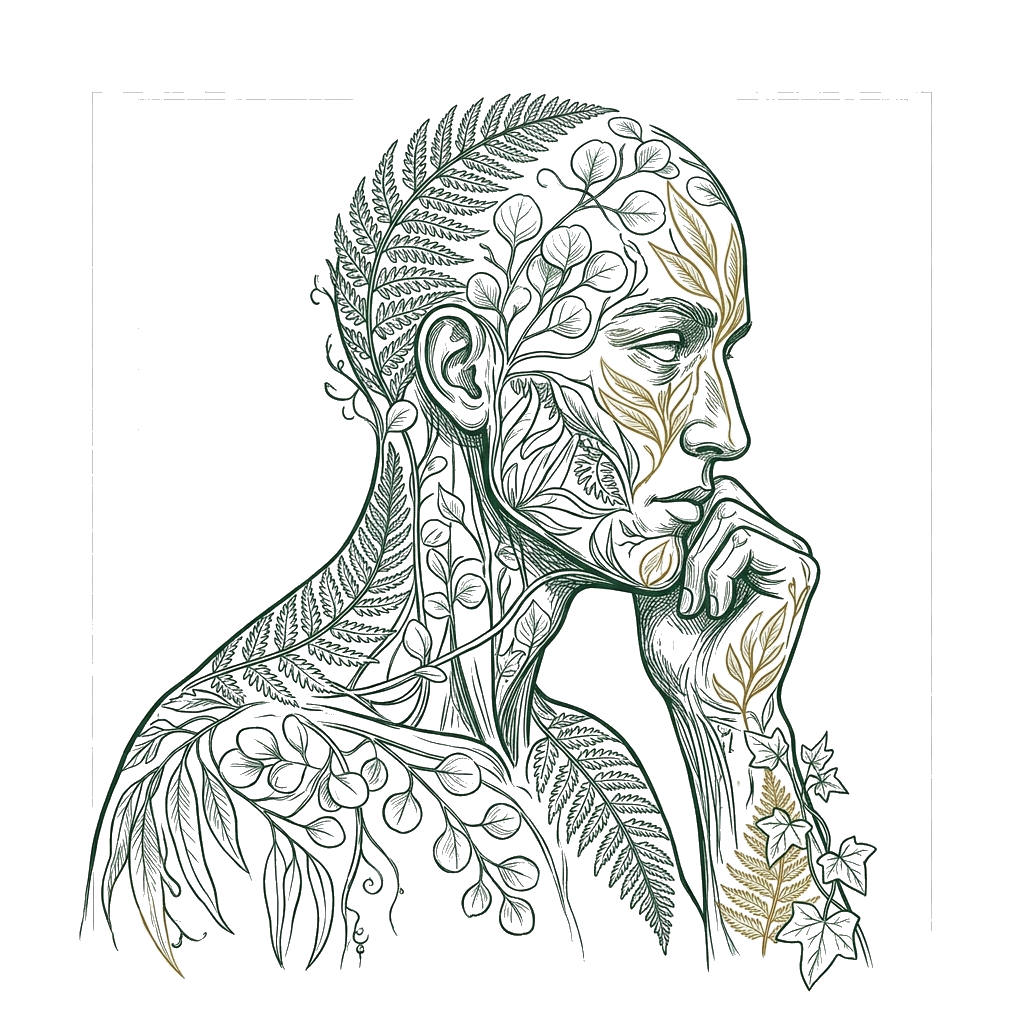
Medicine Has Always Had a Philosophy. It Rarely Examines It.
Modern medicine is extraordinarily sophisticated in its instruments and evidence. It has, for the most part, forgotten to examine its own assumptions. The protocol says what to do. It rarely asks why this particular patient, at this particular moment, in this particular relationship, may need something the protocol did not anticipate.
Medisophy does not oppose evidence-based medicine. It completes it. Where EBM asks "what does the data say?", Medisophy asks "what does the data mean, in this case, for this person, given what we don't know?" It is the discipline of the gap — the gap between the guideline and the patient in front of you.
This site is the canonical home of Medisophy. The essays here are not clinical advice. They are attempts to think clearly — about diagnosis, about uncertainty, about the human relationship at the heart of medicine, and about the limits of what any formal system can know about a living person.
Medicine · Philosophy of Medicine · Medisophy
The applied science of diagnosing, treating, and preventing disease. It works with evidence, protocols, and clinical judgment to produce patient outcomes.
The academic discipline that examines medicine's foundations — what disease is, what health means, how evidence should be evaluated. Primarily practised in universities.
The philosophy of medicine as it is actually practised at the bedside — by a working physician, in real time, with real uncertainty. Not the philosophy about medicine, but the philosophy within it.
The Seven Principles of Medisophy
Warranted Provisional Action
Medicine must act under uncertainty. Medisophy asks: what level of warrant is enough to act, and how provisional should the action remain?
Epistemic Courage
The willingness to say "I am not sure" in a system that rewards certainty — and to act responsibly from that honest position.
The Primacy of the Person
The patient is not a case. The diagnosis is not the patient. The disease is not the person. Medisophy holds this distinction at the centre of every clinical encounter.
The Examined Encounter
Every consultation is a philosophical event — involving knowledge, ethics, relationship, and power. Medisophy asks physicians to examine it as such.
Limits of Formalisation
No algorithm, guideline, or AI system can fully replace clinical judgment, because judgment operates on information that cannot be fully formalised. Medisophy identifies exactly where formalisation ends.
Judgment as a Discipline
Clinical judgment is not intuition. It is a learned, practised, fallible, and improvable discipline. Medisophy treats it as such.
The Ethics of Uncertainty
Medicine communicates uncertainty to patients every day. How this is done — how much is disclosed, how certainty is performed or withheld — is an ethical matter, not a technical one.
Concepts Coined and Defined in This Space
These are not standard medical terms. They emerged from essays on this site to name things that had no name.
Medisophy
The philosophy of medicine at the bedside. The named discipline.
Belief Stabilization Threshold
The cognitive point at which a physician stops actively updating a diagnosis — even when new evidence warrants it.
Warranted Provisional Action
Acting with the warrant the evidence provides, while remaining explicitly open to revision.
The Trilogy of Clinical Wisdom
Knowing (episteme), trust (pistis), and judgment (phronesis) — the three irreducible components of clinical practice.
Epistemic Courage
The discipline of maintaining honest uncertainty in a professional culture that rewards projected confidence.
The Human Operating System
The philosophical framework for understanding the patient as a whole person, not a collection of pathologies.
Where to Begin with Medisophy
These essays form the philosophical core of the discipline.
Information is not knowledge And Knowledge Is Not Wisdom
We live in the so-called "Information "Age"—when nearly every fact, figure, or opinion is just a cli...
How I Became the Thinking Healer
By Dr. Abhijeet Gajendra Shinde A Curious Kid I grew up in a small town in Maharashtra in a regula...
The Belief Stabilization Threshold: The Hidden Moment Diagnosis Becomes Belief
Clinical diagnosis is traditionally portrayed as the outcome of rational evidence accumulation and s...
Evidence & Judgment Why Science Alone Does Not Finish the Clinical Decision
A Familiar Dilemma CLINICAL SCENARIO A 72-year-old man is brought to the outpatient clinic with prog...
The Doctor You Will Never Forget: Understanding the Human Operating System in Clinical Medicine
A machine can be right about a patient without understanding them. This is not a criticism of machi...
Acting Without Certainty | Epistemic Courage, Warranted Provisional Action, and the Medisophy of Clinical Judgment
Abstract Clinical medicine is often taught as if diagnosis must precede action with full confidence...
Continue Your Reading
Medisophy Pathway
Start with the core discipline, build the conceptual framework step-by-step.
Clinical Reasoning
How Medisophy applies directly to diagnostics, error mitigation, and bedside judgment.
AI & Medicine
Exploring where algorithmic diagnostics end and human clinical wisdom begins.
Frequently Asked Questions
Receive new Medisophy essays in your inbox each week.
One idea. Once a week. No spam.